


By Claire Schnatterbeck
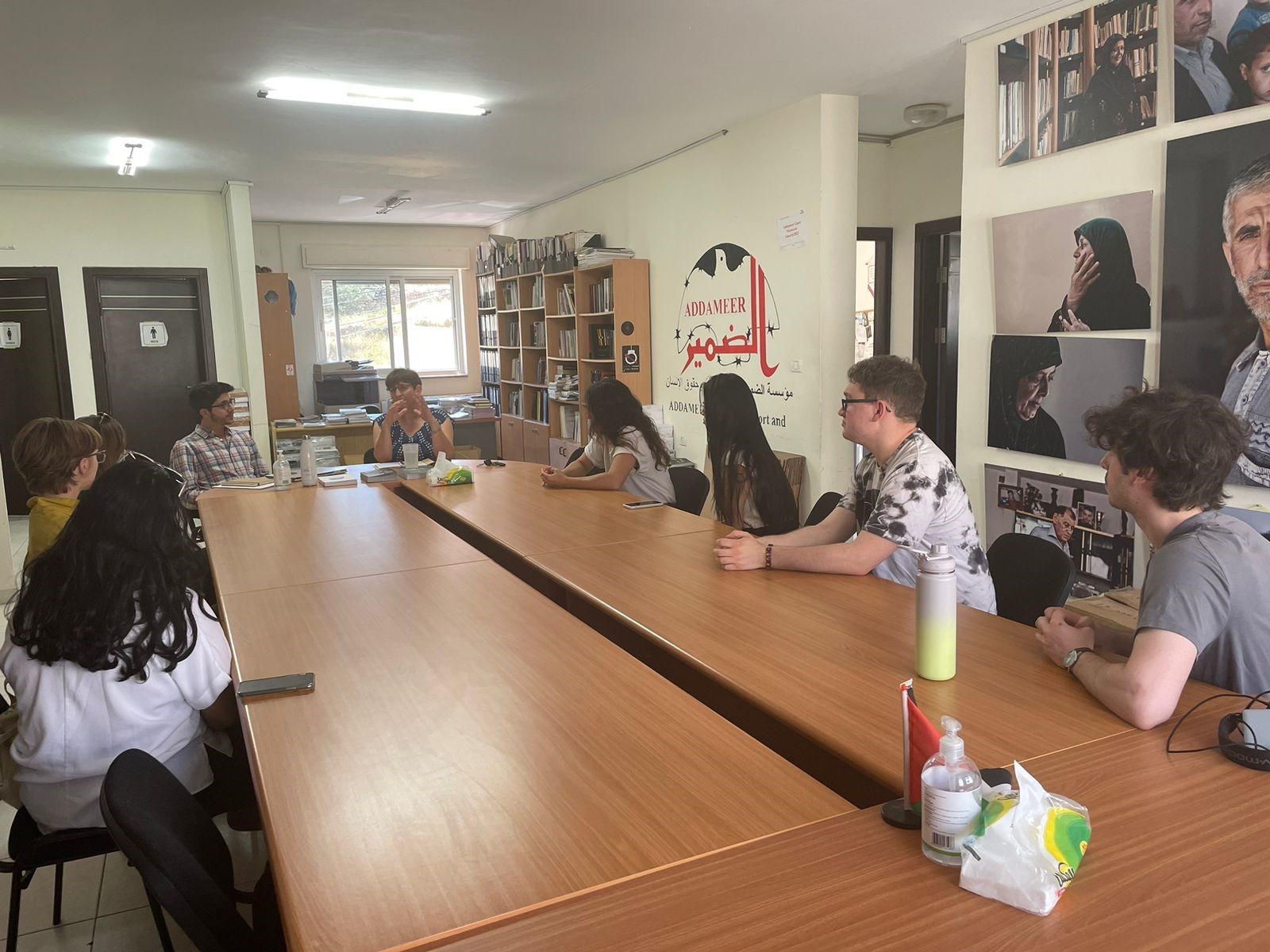
RAMALLAH, WEST BANK—On Wednesday, July 19th, IFP-Palestine students visited the Addameer Prisoner Support and Human Rights Association offices. The NGO—whose name means “conscience” in Arabic—is a civil institution working to support Palestinian political prisoners held in Israeli and Palestinian prisons.
Students met with Rami Kukhun and the director of Addameer, Sahar Fransise, to learn more about the organization's work to support prisoners. Fransise emphasized the critical health conditions in Israeli prisons and the lack of legal representation for prisoners going through the military court system. For example, many prisoners are denied translation services during their sentencing, leaving them confused and uninformed about what they are even being charged with and how long they will be in prison.
Fransise told students about the case of Walid Daqqa, a man who, at the age of 62, has spent 37 years in prison. Throughout his imprisonment, Daqqa published books and faced mistreatment and solitary confinement because of his activism. His family has recently applied for his release on health grounds after Daqqa was diagnosed with myelofibrosis, a rare bone marrow cancer. Because of medical negligence by the prison system, Daqqa is now unable to breathe without a respirator and deals with many complications from his illness. However, because he has a life sentence, the terms of his potential release are extremely complicated.
Constantly changing Israeli laws and prison policies make navigating its legal system incredibly difficult for prisoners and the organization who wish to help them. Addameer has faced many raids by Israeli forces and, in 2021, was labeled a terrorist organization by Israel, along with five other Palestinian non-profit NGOs (Al-Haq, Bisan Center for Research and Development, Defence for Children International, Union of Palestinian Women's Committees and Union of Agricultural Work Committees). Because of this label, Addameer cannot work directly with the lawyers who represent prisoners.
As the students were entering and exiting the offices, there were clear signs of how the IDF used explosives and force when they raided the offices, stealing computers, printers, and even office furniture. Fransise noted that these are simply methods of intimidation to limit the impact of Addameer and organizations like it. However, these organizations remain steadfast in their mission to “end torture and other violations of prisoners' rights through monitoring, legal procedures and solidarity campaigns.”